Key Takeaways
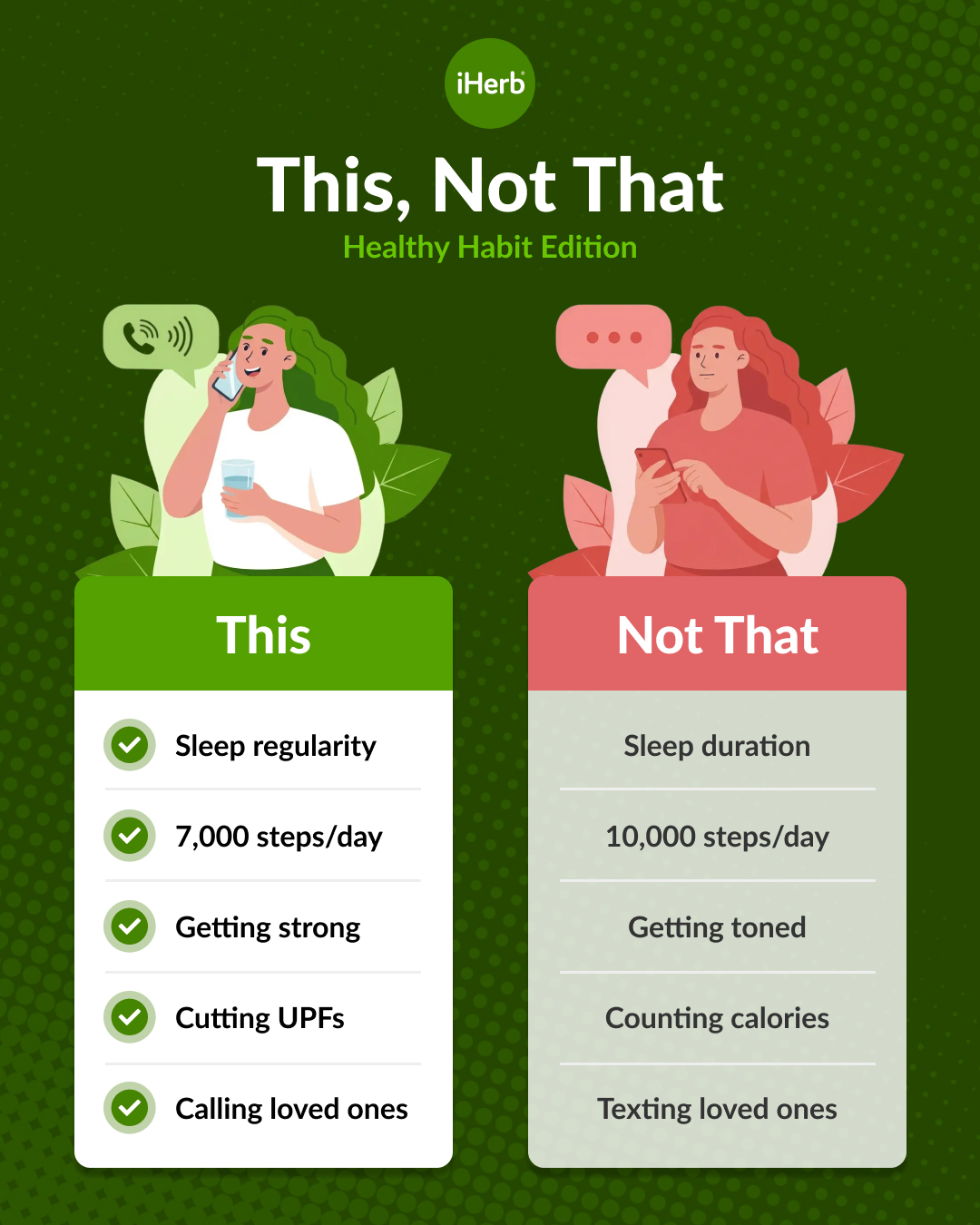
- Sleep: Regularity (waking up at the same time) may be a stronger predictor of mortality risk than duration.
- Steps: The mortality risk reduction plateaus at 7,000 daily steps, debunking the "10,000 steps" myth.
- Strength: Strength training is linked to longer telomeres, which are associated with a younger biological age.
- Diet: Reducing Ultra-Processed Foods (UPFs) is crucial for supporting mental well-being and preventing metabolic diseases.
- Connection: Social isolation carries a mortality risk comparable to smoking or obesity.
Why Daily Habits Matter
Your daily habits act as the fundamental drivers of your physiological health. Evidence suggests that the most effective path to longevity requires consistency rather than extreme measures.
In this article, we evaluate five research-backed habits that have been shown to profoundly impact biological aging—from lengthening telomeres to regulating circadian rhythms. If you can commit to these habits as a lifelong practice, you can profoundly optimize your cellular health and overall well-being for the long term.
Here are the five best daily habits for health and wellness, according to science.
1. Prioritize Sleep "Regularity" Over Duration
While getting 7-9 hours of sleep has long been the gold standard, emerging research suggests that when you sleep matters just as much, if not more, than how long you sleep.
- The Habit: Going to bed and waking up at the same time every day, even on weekends.
- Recent Science: A landmark study published in the journal Sleep analyzed over 60,000 people and found that sleep regularity was a stronger predictor of mortality risk than sleep duration.
- Key Finding: Participants with the most irregular sleep patterns had a significantly higher risk of all-cause mortality, cancer, and cardiometabolic death compared to those with regular schedules. The data suggest that consistency helps maintain the body's circadian rhythms, which regulate inflammation and metabolism.
2. Aim For 7,000 Steps Daily
While developing a workout routine is an excellent habit for health, starting with increasing your daily movement output in general may be a more feasible way to achieve consistency.
The arbitrary goal of "10,000 steps" has been refined by more precise data. Recent meta-analyses have pinpointed the "sweet spot" for longevity, making daily movement more achievable.
- The Habit: Walking approximately 7,000 to 7,500 steps daily.
- Recent Science: A Harvard-led study published in the British Journal of Sports Medicine found that walking as few as 4,000 steps a day can significantly lower the risk of death and heart disease.
- Key Finding: The mortality risk reduction continues to improve up to approximately 7,000–7,500 steps, after which the benefits plateau. Another study showed that walking 7,000 steps reduced the risk of death by 47% compared to walking fewer steps, with little additional benefit gained from reaching 10,000.
3. Implement Strength Training
If you’re not already lifting weights, this is your year to start.
Muscle helps support your metabolism, postural alignment, immune health, and bone health. Every year after the age of 35, we lose approximately 1-3% of our muscle mass. That’s why it’s important to incorporate 2-3 strength workouts every week.
Strength training has also been increasingly recognized not just for building muscle, but for slowing down cellular aging.
- The Habit: Engaging in muscle-strengthening activities (lifting weights, resistance bands, or bodyweight exercises) for 30–60 minutes per week.
- Recent Science: A study involving over 4,800 adults found a direct link between regular strength training and longer telomeres—the protective caps on the ends of DNA strands that shorten as we age.
- Key Finding: Individuals who engaged in regular strength training had telomeres equivalent to being 3.9 years biologically younger than those who did not. Additionally, a meta-analysis of 16 studies found that 30–60 minutes of weekly resistance training reduced the risk of all-cause mortality by 10–17%.
4. Reduce Ultra-Processed Foods (UPFs)
The general population has become increasingly aware of the importance of protein intake, but a growing body of evidence suggests we need to look beyond calories and macronutrients. The new frontier of health isn't just about what nutrients you eat, but how your food is made, specifically prioritizing more whole foods and reducing ultra-processed foods (UPFs).
To identify ultra-processed foods, experts use NOVA Group 4. This category distinguishes "industrial formulations" from simply processed foods (Group 3) that only add salt or sugar. Group 4 products typically contain ingredients rarely found in a home kitchen, such as high-fructose corn syrup, hydrogenated oils, and cosmetic additives like emulsifiers and colorings.
- The Habit: Minimizing intake of "ultra-processed" foods (packaged snacks, sugary drinks, reconstituted meat products) in favor of whole foods.
- Recent Science: An "umbrella review" published in The BMJ (British Medical Journal) analyzed data from nearly 10 million people to evaluate the risks of UPFs.
- Key Finding: High consumption of ultra-processed foods was consistently linked to 32 adverse health outcomes, including a 50% increased risk of cardiovascular death, a 12% higher risk of type 2 diabetes, and significantly higher risks of anxiety and depression. Another 2024 study linked rising UPF intake specifically to a sharp increase in prediabetes risk in young adults.
5. Prioritize "Social Connection."
Last but not least, social connection is now being treated by major health organizations as a clinical vital sign, comparable to blood pressure or weight.
- The Habit: Maintaining regular, in-person contact with friends and family (e.g., a weekly visit or group activity).
- Recent Science: Following the US Surgeon General's 2023 advisory on loneliness, new data from the UK Biobank (analyzing over 450,000 people) quantified the mortality risk of isolation.
- Key Finding: The findings suggest that interventions addressing social connection should be prioritized in public health strategies and clinical practice, potentially targeting high-risk individuals and those with infrequent social contact.
Even starting with a micro-habit known as the "8-Minute Phone Call" can have a huge impact. This concept suggests that a brief, focused conversation is all it takes to maintain emotional bonds and reduce feelings of isolation.
The logic is simple: weekly check-ins, short enough to fit into a busy schedule but long enough to have a meaningful impact, make a difference. It removes the pressure of an open-ended commitment ("I don't have time for a long catch-up") and ensures you stay connected. Texting is efficient, but hearing a voice lowers stress hormones and releases oxytocin, the "bonding hormone," far more effectively.
References:
- Windred DP, Burns AC, Lane JM, Saxena R, Rutter MK, Cain SW, Phillips AJK. Sleep regularity is a stronger predictor of mortality risk than sleep duration: A prospective cohort study. Sleep. 2024 Jan 11;47(1):zsad253. doi: 10.1093/sleep/zsad253. PMID: 37738616; PMCID: PMC10782501.
- Hamaya R, Evenson KR, Lieberman D, Lee IM. Association between frequency of meeting daily step thresholds and all-cause mortality and cardiovascular disease in older women. Br J Sports Med. 2025 Oct 21:bjsports-2025-110311. doi: 10.1136/bjsports-2025-110311. Epub ahead of print. PMID: 41120219.
- Ding D, Nguyen B, Nau T, Luo M, Del Pozo Cruz B, Dempsey PC, Munn Z, Jefferis BJ, Sherrington C, Calleja EA, Hau Chong K, Davis R, Francois ME, Tiedemann A, Biddle SJH, Okely A, Bauman A, Ekelund U, Clare P, Owen K. Daily steps and health outcomes in adults: a systematic review and dose-response meta-analysis. Lancet Public Health. 2025 Aug;10(8):e668-e681. doi: 10.1016/S2468-2667(25)00164-1. Epub 2025 Jul 23. Erratum in: Lancet Public Health. 2025 Sep;10(9):e731. doi: 10.1016/S2468-2667(25)00199-9. PMID: 40713949.
- Tucker LA, Bates CJ. Telomere Length and Biological Aging: The Role of Strength Training in 4814 US Men and Women. Biology (Basel). 2024 Oct 30;13(11):883. doi: 10.3390/biology13110883. PMID: 39596838; PMCID: PMC11591842.
- Lane MM, Gamage E, Du S, Ashtree DN, McGuinness AJ, Gauci S, Baker P, Lawrence M, Rebholz CM, Srour B, Touvier M, Jacka FN, O'Neil A, Segasby T, Marx W. Ultra-processed food exposure and adverse health outcomes: umbrella review of epidemiological meta-analyses. BMJ. 2024 Feb 28;384:e077310. doi: 10.1136/bmj-2023-077310. PMID: 38418082; PMCID: PMC10899807.
- Monteiro CA, Cannon G, Levy RB, Moubarac JC, Louzada ML, Rauber F, Khandpur N, Cediel G, Neri D, Martinez-Steele E, Baraldi LG, Jaime PC. Ultra-processed foods: what they are and how to identify them. Public Health Nutr. 2019 Apr;22(5):936-941. doi: 10.1017/S1368980018003762. Epub 2019 Feb 12. PMID: 30744710; PMCID: PMC10260459.
- Hakulinen C, Pulkki-Råback L, Virtanen M, Jokela M, Kivimäki M, Elovainio M. Social isolation and loneliness as risk factors for myocardial infarction, stroke and mortality: UK Biobank cohort study of 479 054 men and women. Heart. 2018 Sep;104(18):1536-1542. doi: 10.1136/heartjnl-2017-312663. Epub 2018 Mar 27. Erratum in: Heart. 2019 Jul;105(14):e8. doi: 10.1136/heartjnl-2017-312663corr1. PMID: 29588329.
- Foster HME, Gill JMR, Mair FS, Celis-Morales CA, Jani BD, Nicholl BI, Lee D, O'Donnell CA. Social connection and mortality in UK Biobank: a prospective cohort analysis. BMC Med. 2023 Nov 10;21(1):384. doi: 10.1186/s12916-023-03055-7. PMID: 37946218; PMCID: PMC10637015.
- Kahlon MK, Aksan N, Aubrey R, Clark N, Cowley-Morillo M, Jacobs EA, Mundhenk R, Sebastian KR, Tomlinson S. Effect of Layperson-Delivered, Empathy-Focused Program of Telephone Calls on Loneliness, Depression, and Anxiety Among Adults During the COVID-19 Pandemic: A Randomized Clinical Trial. JAMA Psychiatry. 2021 Jun 1;78(6):616-622. doi: 10.1001/jamapsychiatry.2021.0113. PMID: 33620417; PMCID: PMC7903319.
DISCLAIMER:
These statements have not been approved by the Food and Drug Administration. These products are not intended to diagnose, treat, cure, or prevent disease.



























































 Table of Contents